Engineer News Network The ultimate online news and information resource for today’s engineer
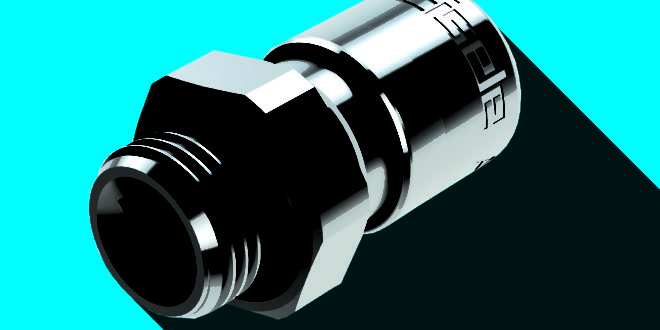
With the advanced development of the 17B series, Eisele has further optimised the sealing system of the INOXLINE push-in fittings.
In the new design, the O-ring is installed in front of the collet. This improves the tightness of the connection and eliminates gaps in the tube at the sealing point.
In combination with FDA-compliant Viton seals, the 17B series is recommended for diverse applications in processing and packaging technology, as well as food and pharmaceutical production.
In addition to the high tightness in pressure and vacuum applications, INOXLINE push-in fittings made of 1.4301/1.3207 stainless steel offer an easy-to-clean design and outstanding resistance to corrosion. This selection of material also guarantees that the transported operating media can never be contaminated by material components or particles.
Seal technology
The special sealing technology of the 17A series with two FKM (Viton) seals in the collet can withstand both internal gas pressures of up to 24 bar and a vacuum pressure as low as -0.95bar.
Depending on the media and connection sizes, pressures of up to 100 bar are also possible with liquids.
Many push-in fittings in the market are designed for high pressures, but that does not automatically make them suitable for vacuum applications.
The release sleeves of push-in fittings with an inner collet enable quick assembly and disassembly of the tube. The second seal in the connections not only enables use under higher pressures, but also offers additional safety to prevent dirt from penetrating the system.